Case study · Marketplace · Home-cooked, pickup only
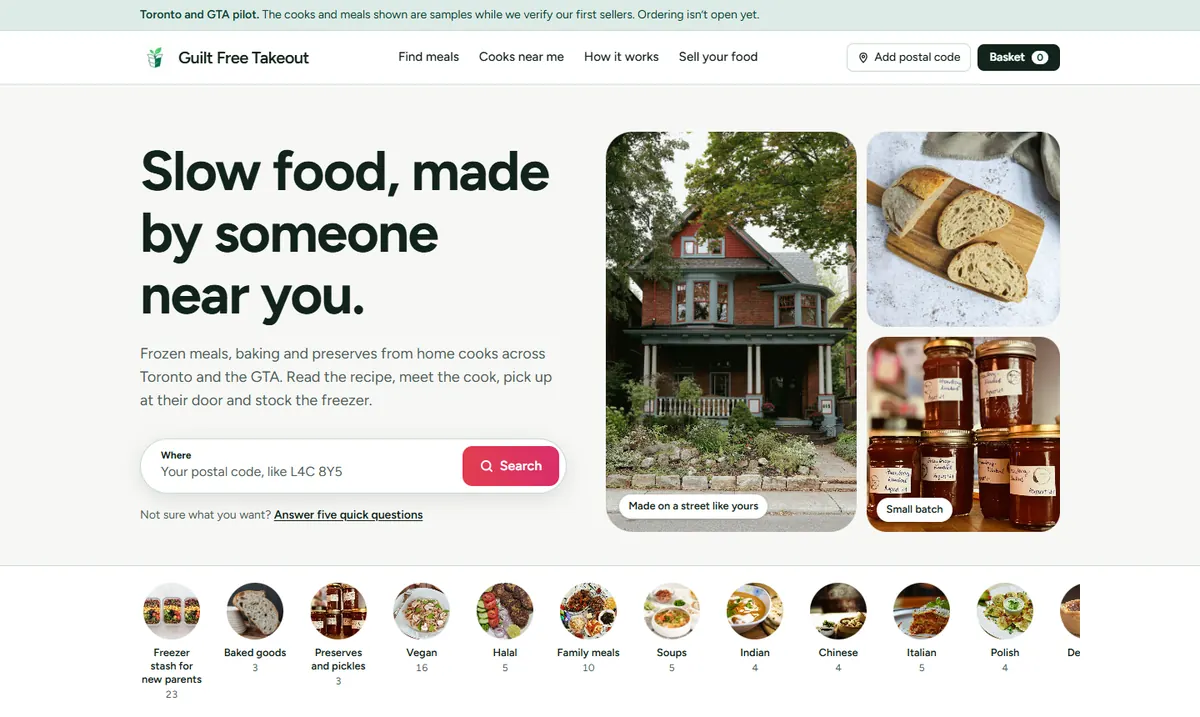
Guilt Free Takeout Slow food, made by someone near you.
A pickup-only marketplace for frozen meals, baking and preserves from GTA home cooks, with the recipe, the cook and a generated label on every dish.
01 — The brief
The problem it solves
Delivery apps sell hot food from kitchens you never see, in bags inside bags. The site’s framing is what family does when a new baby arrives or a week goes sideways: cook ahead, freeze it, drop it off. Meanwhile most good home cooks never sell, because Ontario’s rules for selling food from home look like a wall.
The brief: a two-sided marketplace for Toronto and the GTA where buyers can read the recipe and meet the cook before picking up at their door, and where cooks get a storefront, labels and a plain-language path through public health, certificates and insurance — launched as an honest pilot with every sample clearly marked.
02 — What we built
Features that do real work.
Find meals
Browse frozen, baked and preserved food, sorted by distance once you add a postal code (only the first three characters are used).
Help me find something
Five optional questions — diet, who it’s for, occasion, budget per serving, packaging — with nothing saved.
Meal pages
The full recipe and method, how it arrives frozen versus ready to eat, allergens and kitchen cross-contact, and a mock batch label.
Cook storefronts
Story, dishes, pickup windows, a share link and a “What we checked” panel listing the cook’s kitchen level and documents.
Cook guides
Eight guides in order, from which legal route fits to labels, canning and HST, each dated “last checked” and pointing to official pages.
Run your own numbers
An earnings calculator on the sell page that subtracts ingredients and packaging and says plainly it is not a promise of income.
03 — How it's put together
Structure
Every meal, cook, category and guide has its own URL in the XML sitemap: meal pages under /meal/, storefronts under /cook/ (with a /c/ short link for sharing), diet, collection and cuisine pages under /categories/, and the cook guides under /sell/guides/.
Under the hood
- Next.js on Netlify with Tailwind, with pages served from Netlify’s durable cache.
- Organization, WebSite and SearchAction structured data, plus a unique title and meta description per meal and cook page.
- Labels are generated from the cook’s own recipe, so the ingredients and allergens on the page match the ones on the container.
- Every listing carries its packaging type, which feeds a low-waste filter and the homepage count of 28 of 30 meals in reusable, returnable or compostable packaging.
Details that matter
- A pilot banner on every page and an “Example” tag on every sample card; the footer states that sample cooks, ratings and order counts are fictional until sellers are verified.
- Cooks are sorted into three kitchen levels — home kitchen, commercial kitchen, food business — and a store pauses automatically when a document expires.
- Every price shows the cost per serving beside the total, and returnable jars and tins earn a credit at the next pickup.
Launching a marketplace before it has sellers works if the site says so on every page and puts the trust machinery — checks, labels, guides — in place first.
Want a build
like this one?
Tell us what you're launching. We'll tell you honestly what it needs — and what it doesn't.